
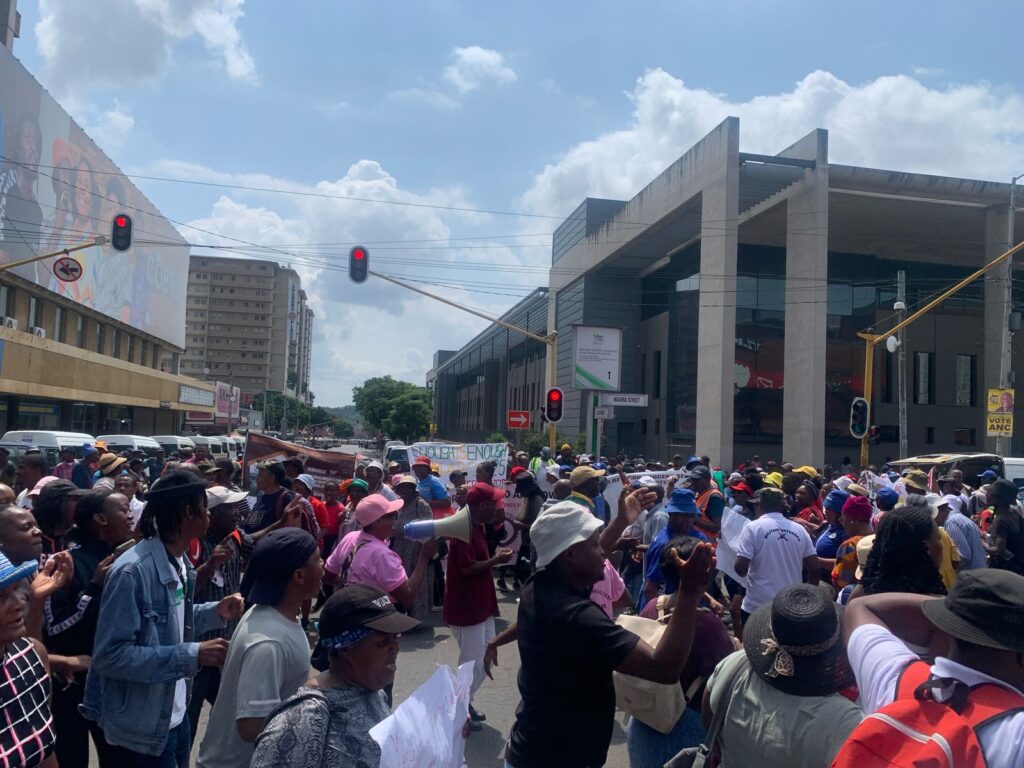
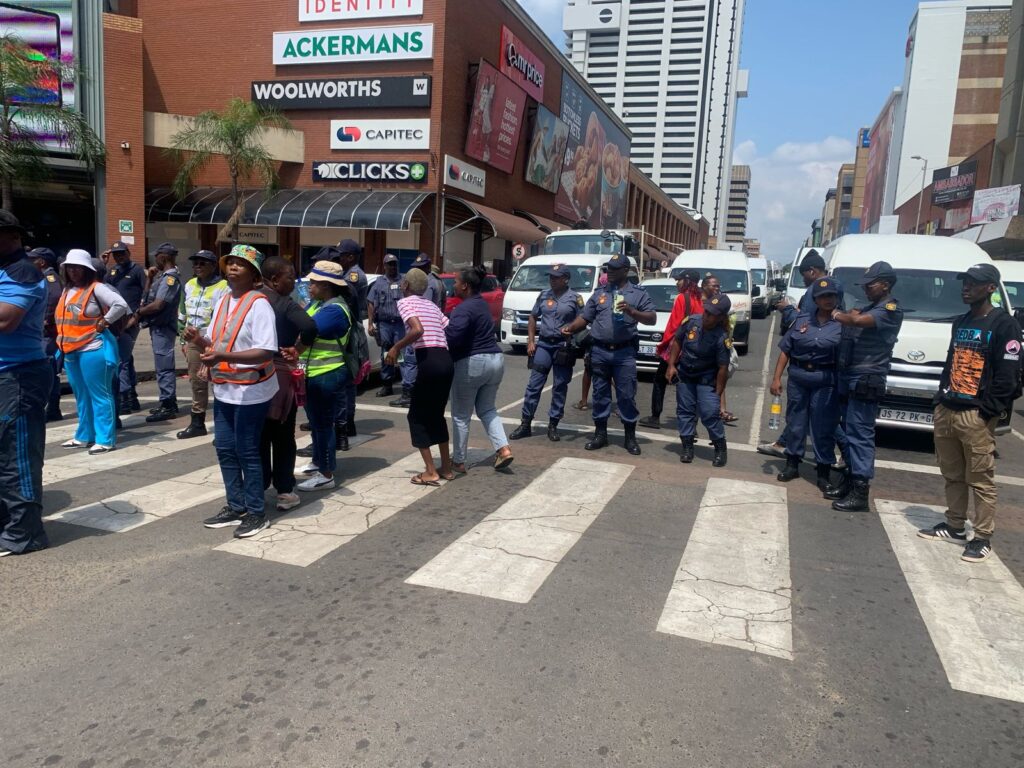
Residents of Tshwane led by the Inwooners Baagi Civic Movement (IBCM) in collaboration with various organizations, staged a mass march that effectively shut down the city on 18 March 2025. The protest began in Marabastad and was escorted by law enforcement to Tshwane House, where demonstrators gathered to voice their concerns.
The protest received support from several civic groups, including the V Thembekile Association, V Pretoria’s People Joint Civic, and other organizations. The movement urged all residents, community organizations, and businesses to participate in the protest to hold the government accountable for ongoing service delivery failures.
The primary goals of the march were to demand improved service delivery, address the rising cost of utilities, improve waste management, and tackle issues surrounding fraudulent billing. Karabo Ratladi, the youth president of the IBCM Civic Movement, explained the group’s concerns, stating, “Our call today is that we haven’t been receiving proper meter readings, meaning we are being charged based on estimates. This is why our grannies and mothers can’t afford to pay—the prices are simply too high. We also want job creation for our youth, and we want to register people who are interested in working as meter readers.”
Khutso Lekalakala, the chairperson of the IBCM Youth League, added, “We are here as young people to support our parents and raise our voices as the youth. Although there have been initiatives aimed at creating jobs for the youth, nothing has materialized. We are here to stand with our families, because their success is also our success.”
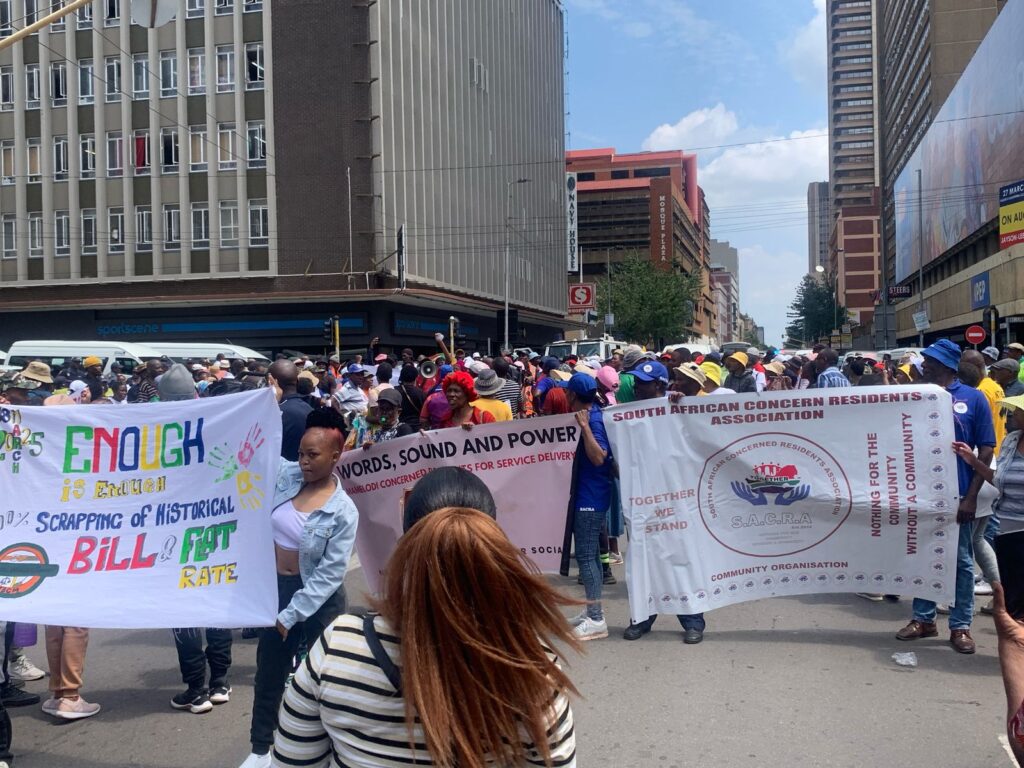
Among the public’s primary concerns were the reduction of electricity rates, the elimination of historical bills, the implementation of a flat-rate billing system, the resolution of fraudulent billing issues, and the restoration of water and electricity in affected areas. The community of Mamelodi, in particular, called on Tshwane to remove miscellaneous charges on utility bills, improve waste management services, and completely eliminate historical bills.
The march marked a significant moment in the ongoing struggle for better services and accountability from local authorities, with residents demanding immediate action to address these critical issues.